Iranian top diplomat's consultations go beyond BRICS
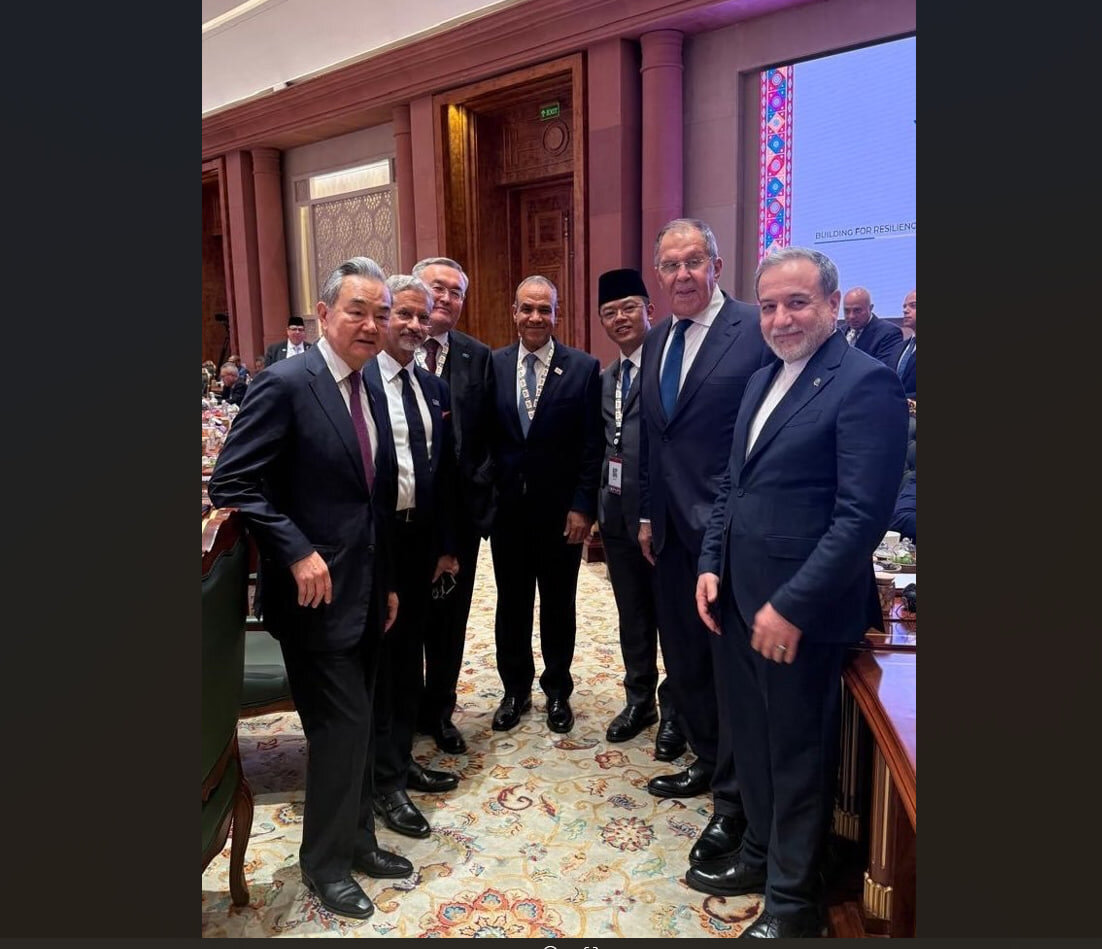
TEHRAN— Iranian Foreign Minister Abbas Araghchi has stepped up diplomatic consultations with regional counterparts on the situation in the Strait of Hormuz, using his meetings and telephone calls on the sidelines of the BRICS Leaders’ Summit in New Delhi to explain Tehran’s position on the strategic waterway and outline the regional approach Iran is pursuing with Oman.
Araghchi’s consultations with the foreign ministers of Oman, Turkey, Egypt, Russia, China, Indonesia, Kazakhstan, and Iraq come ahead of a ministerial-level meeting in Muscat on Monday, where Iran and the Persian Gulf littoral states are expected to discuss regional developments and arrangements concerning maritime traffic through the Strait of Hormuz.
The Iranian foreign minister has stressed that the understanding being pursued between Tehran and Muscat should not be interpreted as an agreement to reopen the strait. Rather, Iran views the proposed arrangement as a framework for managing maritime traffic through a new route under regional coordination and within the framework of international law.
Tehran-Muscat-Ankara coordination takes center stage
Araghchi held a telephone conversation with Omani Foreign Minister Badr bin Hamad Al Busaidi on Saturday evening while in New Delhi as part of President Masoud Pezeshkian’s delegation to the 18th BRICS Leaders’ Summit.
The two foreign ministers discussed the latest regional developments as well as bilateral issues. Their conversation came as Muscat prepared to host the upcoming meeting of the foreign ministers of Iran and other Persian Gulf littoral states.
The Tehran-Muscat channel has assumed particular importance in the current crisis because Oman has traditionally maintained diplomatic ties with the various parties involved in regional disputes and has played a role in facilitating dialogue.
Araghchi’s remarks indicate that Iran wants neighboring countries to have a direct role in determining how maritime traffic is managed in the strategic waterway.
Araghchi also held a telephone conversation with Turkish Foreign Minister Hakan Fidan, during which the two sides reviewed bilateral relations and the latest regional developments.
The Iranian and Turkish foreign ministers stressed the need to prevent a further escalation of tensions and the widening of the crisis. They also emphasized continued consultations and diplomatic efforts to restore stability and calm in the region.
The conversation with Fidan is part of Tehran’s broader diplomatic effort to keep regional channels open as the situation surrounding the Strait of Hormuz remains a major security and economic concern.
Turkey, like other regional countries, has a direct interest in preventing a wider conflict from disrupting trade, energy flows and regional economic activity. The emphasis on diplomacy and de-escalation therefore provides an additional regional channel for addressing the wider consequences of the crisis.
Iraq joins regional consultations
Araghchi also spoke by telephone with Iraqi Foreign Minister Fuad Hussein, discussing bilateral relations and regional developments.
The two ministers underscored the importance of stability and security along the Iran-Iraq border and called for continued coordination between the two countries. They also stressed the need for responsible approaches to regional developments and the prevention of further escalation or expansion of existing conflicts.
The consultations with Baghdad carry particular significance as Iraq is both an immediate neighbor of Iran and a Persian Gulf country with an interest in regional stability and the security of energy and trade routes.
By engaging simultaneously with Oman, Iraq and Turkey, Tehran is seeking to reinforce a regional diplomatic framework in which neighboring states can exchange views directly and contribute to efforts to contain the crisis.
Iran draws a line between navigation arrangements and reopening Hormuz
The central message emerging from Araghchi’s latest diplomacy is that Iran distinguishes between facilitating maritime navigation through an agreed regional mechanism and formally reopening the Strait of Hormuz.
Iran has indicated that the proposed understanding with Oman concerns a new maritime route and practical arrangements for shipping. Details of the route and its maps are expected to be shared with participating countries at the Muscat meeting.
At the same time, Araghchi has tied any broader reopening of the strait to the fulfillment of conditions Tehran considers necessary, particularly the return of the United States to its commitments under the Islamabad memorandum.
This position places the Hormuz issue within the wider diplomatic dispute between Tehran and Washington, while leaving room for Iran and neighboring states to pursue practical measures aimed at reducing risks to regional shipping.
A regional approach to a global economic artery
The Strait of Hormuz is one of the world’s most strategically important maritime passages, connecting the Persian Gulf with the Gulf of Oman and the wider Indian Ocean. Any prolonged disruption to navigation through the waterway can have consequences well beyond the immediate region, particularly for energy markets, international shipping and global trade.
Against this backdrop, Tehran has sought to frame the current discussions as a matter that should primarily be addressed by regional states themselves.
Araghchi’s consultations in New Delhi reinforce that approach. His discussions with the foreign ministers of Oman, Türkiye and Iraq, together with the forthcoming meeting in Muscat, point to an Iranian diplomatic strategy centered on regional consultation, direct engagement with neighboring countries and practical arrangements for maritime navigation.
The strategy also dovetails with President Masoud Pezeshkian’s broader call during the BRICS summit for regional countries to work together to establish security, expand economic cooperation and prevent political or sectarian divisions from turning into wider conflict.
For Iran, the objective is therefore not simply to address the immediate question of shipping through Hormuz. It is also to establish a regional framework in which the countries most directly affected by developments in the Persian Gulf have a greater say in determining the security and economic future.
As the foreign ministers gather in Muscat, Tehran’s message is that dialogue with neighboring states remains open, but that any broader decision on the status of the Strait of Hormuz will remain linked to the wider security and diplomatic conditions surrounding the current crisis.
Leave a Comment